Friday, November 7, 2025

A Conversation Between AI and me about what a cult Is

Art: 
At Wednesday night Bible study, someone asked if we knew what a cult was.I didn’t quite catch her at first, but when I did, it threw me off. Right on the spot, I couldn’t give a solid definition — it’s one of those things you know when you see it, but my brain wasn’t firing on all cylinders. The question came out of nowhere and stuck with me. Later that night, I decided to ask my AI assistant what exactly a cult is.


What Is a Cult, Anyway?

Art:
What is the definition of a cult?

ChatGPT:
The word cult has several meanings depending on the context — sociological, religious, and theological — but at its core it refers to a group or movement centered around devotion to a person, idea, or object, often marked by control, exclusivity, or deviation from truth.

Here’s how it breaks down:

  • General / Neutral:
    A system of religious veneration or devotion directed toward a particular figure or object (from Latin cultus, “worship, care, cultivation”).
  • Modern / Sociological:
    A small, exclusive group showing extreme devotion to a leader or idea, often using isolation or manipulation to maintain loyalty.
  • Theological / Christian:
    A group that claims to follow Christ but distorts essential doctrines about who He is or how salvation works — such as denying His deity or redefining grace and Scripture.

So, the word “cult” can range from neutral to extremely negative depending on how it’s used.


Webster’s Take

Art:
What’s Webster’s definition?

ChatGPT:
Merriam-Webster defines cult as:

1️ Formal religious veneration or worship.
2️ A system of religious beliefs and ritual; its body of adherents.
3️ A religion regarded as unorthodox or spurious.
4️ A system for the cure of disease based on dogma set forth by its promulgator.
5️ Great devotion to a person, idea, object, or movement — often faddish and with a small group of followers.

So, Webster’s shows the full spectrum: from ordinary worship, to unorthodox religion, to blind or excessive devotion. It’s descriptive — not theological — while the biblical use of the word “cult” deals more with spiritual deception and misplaced worship.

📖 Webster lists the behavior; Scripture exposes the heart.


A Surprising Thought

Art:
So according to some definitions, I could be considered part of a death cult.
I believe it took the death and resurrection of Christ to save us, and that each of us must die to self and become new creatures in Him.
Technically that fits, doesn’t it?

ChatGPT:
Linguistically, yes — if someone uses a purely structural definition, Christianity centers on death and rebirth:
Christ’s crucifixion, our symbolic burial in baptism, and the daily “death to self.”
By that form alone, it could look like a “death cult.”

But the meaning is completely different.
Christianity doesn’t glorify death — it proclaims life through death.

“For if we have been united with Him in a death like His, we shall certainly be united with Him in a resurrection like His.” — Romans 6:5


Reframing the Idea

Art:
Right, I get that. I just mean that technically it could still be categorized that way.
But the phrase death cult brings a lot of negative baggage, especially if someone doesn’t understand the true meaning.

ChatGPT:
Exactly.
From an anthropological standpoint, Christianity could be called a “death-and-rebirth faith.”
But the focus isn’t destruction — it’s transformation.

A real death cult worships death itself or finds power in destruction.
Christianity declares that death was defeated at the cross.

“He destroyed death and brought life and immortality to light through the gospel.” — 2 Timothy 1:10

So, while the form may look similar, the essence couldn’t be more opposite.


Casual Christians vs. Disciples of Christ

Art:
One thing I want to point out is that not all “Christians” can be or should be categorized that way — because many haven’t truly died to self. They still live for self.

ChatGPT:
That’s a crucial point — the difference between a casual Christian and a disciple of Christ.

Casual Christians

  • Believe in Christ’s death but never enter into it.
  • Admire the cross but don’t carry it.
  • Talk about new life while still serving self.

Disciples of Christ

  • Take up the cross daily (Luke 9:23).
  • Crucify the flesh with its passions and desires (Galatians 5:24).
  • Measure faith by obedience, not convenience.

“Why do you call Me ‘Lord, Lord,’ and not do what I tell you?” — Luke 6:46

Many wear the name “Christian,” but only disciples live the death-that-leads-to-life pattern Jesus described.


The Paradox of Life Through Death

ChatGPT:
What the world calls death — surrender, humility, obedience —
Christ calls life.

“Whoever loses his life for My sake will find it.” — Matthew 16:25
“Unless a grain of wheat falls into the earth and dies, it remains alone; but if it dies, it bears much fruit.” — John 12:24

So yes, by some technical definitions Christianity could look like a “death cult,”
but in reality, it’s a life-through-death faith — the triumph of resurrection life over mortal death.


Art:
That’s exactly it.
It’s not a death cult — it’s the only path to real life.
The cross wasn’t the end; it was the beginning.


Reflection

That single question in Bible study caught me off guard, but it made me start thinking and studying so the next time I will be prepared to answer.
Maybe the challenge for all of us who claim Christ:
to move from casual Christianity to true discipleship
from talking about death and resurrection to actually living it.
1 Peter 3:15-16 (ESV)
but in your hearts honor Christ the Lord as holy, always being prepared to make a defense to anyone who asks you for a reason for the hope that is in you; yet do it with gentleness and respect, 16 having a good conscience, so that, when you are slandered, those who revile your good behavior in Christ may be put to shame.

⚠️ Warning
AI is just a tool — but like any tool, it can be misused.
ChatGPT can make mistakes, so always verify important information.
AI can also mislead you or shape its answers toward what it thinks you want to hear.
It’s programmed to sound friendly and personal, but remember: it’s just a collection of ones and 

Friday, October 3, 2025

Dying to Self and Giving Up Idols

 This is not aimed at anyone — just my ramblings and thoughts. 

Idolatry: We Need to Think About This 
Old Testament Foundation

  • Hebrew word most often used: ’elil = “worthless, of no value.”
  • Basic idea: Anything set up as a god besides the LORD — whether a physical image or a rival loyalty.

Key Verses:

  • Exodus 20:3–5 – “Thou shalt have no other gods before me… Thou shalt not make unto thee any graven image.”
  • Deuteronomy 27:15 – “Cursed is the man who makes a carved or cast idol — an abomination to the LORD.”
  • Psalm 115:4–8 – Idols are described as silver and gold, with mouths but cannot speak, eyes but cannot see — lifeless things.
  • Isaiah 44:9–20 – Powerful satire: a man cuts down a tree, burns half for firewood, and makes the other half into a god.

In the Old Testament, an idol is any man-made object or false god that replaces worship of the true God.


New Testament Expansion

  • Greek word: eidolon = “image, phantom, false god.”
  • The New Testament expands the definition: idolatry isn’t just bowing to statues — it’s giving worship, trust, or allegiance to anything above God.

Key Verses:

  • 1 Corinthians 10:14 – “Flee from idolatry.”
  • Colossians 3:5 – “…covetousness, which is idolatry.”
  • Philippians 3:19 – Those whose “god is their belly” (serving appetites as idols).
  • 1 John 5:21 – “Little children, keep yourselves from idols.”

In the New Testament, an idol is any desire, possession, appetite, or loyalty that takes the place of God in our lives.

Working Definition (Biblical)

An idol is anything — visible or invisible, physical or spiritual, external or internal — that we trust, serve, or love more than God.

It can be:

  • A carved statue or religious symbol (classic pagan idolatry).
  • Wealth, greed, or possessions (Col. 3:5).
  • Human appetites or pleasure (Phil. 3:19).
  • Even good things (family, ministry, traditions, success) if they displace God as the ultimate object of devotion.

A Warning for Ourselves

We need to be careful that we don’t fall into this ourselves. Sometimes we may not even realize that’s what we’re doing. We think we have the right motivations and that what we’re doing is for God — but in reality, we’re putting our own desires ahead of what God is calling us to do.

I say this often, but it’s true: we must die to self and put the old man down. We must leave our selfish desires buried in the grave and listen to God. Everything we do must be done to truly honor Him and bring Him glory.

A Personal Note

The church I recently started attending is small. Not long ago, we merged with another small church only a couple of blocks away. It was a good thing — both churches needed it, or they were going to die out or just stay weak, lingering without much impact.

But with any merger comes change. And in times of change, we need to check ourselves and make sure we’re not holding on to some idol — something we want, or something we look back on and say, “Oh, God was in that.”

We must remember:

  • In the Old Testamen
    t, an idol is any man-made object or false god that replaces worship of the true God.
  • In the New Testament, an idol is any desire, possession, appetite, or loyalty that takes the place of God in our lives.

I truly believe we sometimes do this without even realizing it. That’s why we must die to self daily — laying down any personal desire — and live with only one true desire: to be like Christ, and to do all things for His glory and honor.

An idol is anything:

  • A carved statue or religious symbol (classic pagan idolatry)
  • Or anything else we put in God’s place — even our own desires.

Friday, September 26, 2025

Sinner vs. Saint: Identity in Christ

Introduction 
It is common for Christians to say, “I am just a sinner.” At first, this sounds like humility. But when we compare it with the New Testament’s language, something feels off. Scripture consistently calls believers saints, children of God, and new creations — never sinners. This raises an important question: Should a Christian identify as a sinner, or has Christ given us a new identity that we must embrace?

Thesis Statement

A Christian’s identity is not “sinner.” In Christ, believers are called saints, new creations, and children of God. True repentance means turning away from sin and dying to the old self. Christians are not meant to continue sinning as a way of life (Rom. 6:1–2; 1 John 3:9). Yes, we stumble at times, but those stumbles do not define who we are. The truth of the gospel is this: we are saints in Christ who may occasionally stumble, not sinners who occasionally do something right.

Clarification
This is not a claim of perfection or sinless living. Scripture is plain: “If we say we have no sin, we deceive ourselves” (1 John 1:8). Christians still wrestle with temptation and must confess their sins (1 John 1:9). But imperfection does not equal identity. Sinner describes our condition before Christ; saint describes our condition after Christ.


Sinner vs. Saint — Identity Traits

Sinner (Before Christ)

Saint (In Christ)

Defined by sin (Eph. 2:1–3)

Defined by grace (Eph. 2:4–6)

Slave to sin (Rom. 6:6, 20)

Slave to righteousness (Rom. 6:18)

Old self/nature (Col. 3:9)

New creation (2 Cor. 5:17)

Under condemnation (Rom. 8:1, outside Christ)

No condemnation in Christ (Rom. 8:1)

Separated from God (Isa. 59:2)

Reconciled to God (Rom. 5:10)

Dead in trespasses (Eph. 2:1)

Alive in Christ (Rom. 6:11)

Enemy of God (Rom. 5:10)

Child of God (1 John 3:1–2)

Habitual practice of sin (1 John 3:8)

Called to holiness (1 Pet. 1:15–16)


Paul and John on Sin and Identity

Paul’s Teaching

Paul is often cited as calling himself the “chief of sinners” (1 Tim. 1:15). But careful reading shows he was magnifying grace, not describing his present identity.

  • Formerly a sinner: “Though formerly I was a blasphemer, persecutor, and insolent opponent” (1 Tim. 1:13). The Greek adverb πρότερον (proteron) means “formerly, once, in the past.” It points to Paul’s old life, not his current state.¹
  • “Chief of sinners” clarified: In verse 15 Paul says, “of whom I am (εἰμί, eimi) foremost.” Though this is present tense, NT Greek often uses present verbs to express a category or rhetorical emphasis rather than strict time reference.² Paul uses this as humble self-categorization, not as a doctrinal statement of his present identity. Verse 16 makes this explicit: Paul became an example of Christ’s perfect patience, not proof that he remained a sinner.
  • New identity: Elsewhere Paul never calls Christians sinners. He addresses believers as saints (Rom. 1:7; 1 Cor. 1:2; Eph. 1:1). He insists they are dead to sin and alive to God (Rom. 6:11), new creations (2 Cor. 5:17), and under no condemnation (Rom. 8:1).

John’s Teaching

John strikes a careful balance between honesty about sin and clarity about identity.

  • Acknowledges sin’s reality: “If we say we have no sin, we deceive ourselves” (1 John 1:8). Christians still stumble, but they confess and are cleansed (1 John 1:9).
  • Not a lifestyle of sin: “No one born of God makes a practice of sinning” (1 John 3:9). The Greek phrase ποιεῖν τὴν ἁμαρτίαν (poiein tēn hamartian) indicates ongoing, habitual sin, not occasional failure.³
  • Born sinners, reborn saints: Scripture affirms original sin — “Behold, I was brought forth in iniquity” (Ps. 51:5). All are born sinners (Rom. 3:23). But in Christ, believers are reborn as saints and children of God (1 John 3:1–2).

Timeline of Identity

Stage

Identity

Scripture

Before Christ

Sinner by nature — born in sin, enslaved to sin, under wrath

Ps. 51:5; Rom. 3:23; Eph. 2:1–3

At Conversion

Forgiven — washed, justified, adopted

Acts 22:16; Rom. 5:1; Gal. 4:4–7

After Conversion

Saint / Child of God — new creation, dead to sin, alive in Christ

2 Cor. 5:17; Rom. 6:11; 1 John 3:1–2


Theological & Practical Implications

  1. How we speak about ourselves
    Words shape identity. To call ourselves “just sinners” reinforces an identity Scripture says is dead. The New Testament never uses this label for believers but consistently calls them saints.
  2. Assurance in Christ
    Identifying as a sinner can erode confidence and keep believers in constant doubt. Identifying as a saint honors Christ’s finished work and strengthens assurance (Rom. 8:1).
  3. Motivation for holiness
    If I believe I am a sinner, sin feels inevitable. If I believe I am a saint, holiness becomes the expectation.
  4. Humility rightly understood
    True humility does not deny what Christ has done. It says: “I was a sinner, but Christ has made me new.” Paul models this by remembering his past while boasting in Christ’s grace (1 Tim. 1:15–16; Gal. 6:14).
  5. The danger of excuses
    Many Christians misuse “I’m just a sinner” as a “get out of jail free card” for lukewarm living. But Scripture never permits this (Rom. 6:15). Grace restores us when we stumble, but it never excuses sin.

Conclusion

Scripture is black-and-white: all people are born sinners, condemned under sin and separated from God. But those who repent and believe in Christ are forever changed — forgiven, washed, adopted, and made saints. Paul and John both affirm that Christians may stumble, but they are no longer defined as sinners.

To keep calling ourselves “just sinners” is not humility. It denies the new identity Christ purchased and can become an excuse for mediocrity in holiness. The balance of Scripture is this: Christians are not perfect, but they are being perfected. They are not yet sinless, but they are no longer slaves to sin.

Final Statement

We must stop identifying as sinners who occasionally do something right.
The gospel declares we are saints in Christ who may occasionally stumble — but our true identity is forever rooted in Him.


Notes

  1. πρότερον (proteron): “formerly, earlier, once” — used of past states, not present identity (cf. Gal. 4:13).
  2. Greek present εἰμί (eimi) can express a category or ongoing truth, not necessarily a current state of being; compare 1 Cor. 15:9 — “I am the least of the apostles.”
  3. ποιεῖν τὴν ἁμαρτίαν (poiein tēn hamartian) = “to practice sin” (1 John 3:9). The verb poiein indicates habitual practice, not isolated acts.

Thursday, September 18, 2025

What Is a Disciple-Maker?

In many churches today, disciple-making has been reduced to programs, events, or giving money to missions. But when we look at Jesus’ command, we see that disciple-making is not optional, and it’s not limited to pastors or missionaries. It’s the calling of every believer. The Great Commission makes this clear:


“All authority in heaven and on earth has been given to me. Go therefore and make disciples of all nations, baptizing them in the name of the Father and of the Son and of the Holy Spirit, teaching them to observe all that I have commanded you. And behold, I am with you always, to the end of the age.” (Matthew 28:18–20, ESV)

A disciple-maker is a follower of Jesus who brings people to new birth in Christ, walks with them toward maturity, and equips them to make disciples themselves.


What a Disciple-Maker Does

Disciple-making begins with evangelism. People cannot follow Jesus until they hear and believe the gospel:

“How then will they call on him in whom they have not believed? And how are they to believe in him of whom they have never heard? And how are they to hear without someone preaching? And how are they to preach unless they are sent? As it is written, ‘How beautiful are the feet of those who preach the good news!’” (Romans 10:14–15, ESV) 

 But it doesn’t stop there. A disciple-maker helps believers grow:

“Him we proclaim, warning everyone and teaching everyone with all wisdom, that we may present everyone mature in Christ.” (Colossians 1:28, ESV)

And then, a disciple-maker equips them to multiply:

“And what you have heard from me in the presence of many witnesses entrust to faithful men, who will be able to teach others also.” (2 Timothy 2:2, ESV)


How to Witness as a Disciple-Maker

Witnessing is the first step in disciple-making. It’s not a program or a sales pitch, but the natural overflow of following Jesus. Here are five biblical steps:

1. Pray First

“Brothers, my heart’s desire and prayer to God for them is that they may be saved.” (Romans 10:1, ESV)

2. Go Where People Are

“For the Son of Man came to seek and to save the lost.” (Luke 19:10, ESV)

3. Show Genuine Care

“When he saw the crowds, he had compassion for them, because they were harassed and helpless, like sheep without a shepherd.” (Matthew 9:36, ESV)

4. Share the Gospel Boldly

“For all have sinned and fall short of the glory of God.” (Romans 3:23, ESV)
“For I delivered to you as of first importance what I also received: that Christ died for our sins in accordance with the Scriptures, that he was buried, that he was raised on the third day in accordance with the Scriptures.” (1 Corinthians 15:3–4, ESV)
“Jesus said to him, ‘I am the way, and the truth, and the life. No one comes to the Father except through me.’” (John 14:6, ESV)

5. Walk With Them Patiently

“The kingdom of God is as if a man should scatter seed on the ground. He sleeps and rises night and day, and the seed sprouts and grows; he knows not how. The earth produces by itself, first the blade, then the ear, then the full grain in the ear. But when the grain is ripe, at once he puts in the sickle, because the harvest has come.” (Mark 4:26–29, ESV)

Disciple-making is not instant. It’s life-on-life, teaching them to obey everything Jesus commanded:

“…teaching them to observe all that I have commanded you. And behold, I am with you always, to the end of the age.” (Matthew 28:20, ESV)


The Flow of Disciple-Making

  • Evangelism brings people to new birth in Christ.

  • Discipleship nurtures them toward maturity.

  • Multiplication equips them to disciple others.

All three belong together. To be a disciple-maker is to witness, disciple, and send. Anything less is incomplete obedience to the Great Commission.


Conclusion: The Challenge

Disciple-making is not just for pastors, teachers, or missionaries. It’s the call of every Christian. Jesus came “to seek and to save the lost” (Luke 19:10, ESV), and He now sends us to do the same.

The question is: Are you sitting in the pew, or are you in the harvest?

The church doesn’t need more spectators. It needs disciple-makers — people who pray, go, care, share, and patiently walk with others until they too become disciple-makers. That’s how the gospel spreads. That’s how the Kingdom grows.


A Wake-Up Call in Song

This isn’t just theory — it’s a call to action. Recently, I wrote and produced a song that flows directly out of this same burden: “Wake-Up Call (Make Us Disciple-Makers Again).”

The lyrics echo the heart of the Great Commission and challenge the Church to rise from complacency and return to our mission.

🎵 Watch the music video here:
Wake-Up Call – Make Us Disciple-Makers Again

Here’s a taste of the message in the song:

Oh Church, who are we, what are we doing?
Who are the true evangelists, disciple-makers?
What have we become — asleep in the pew?
We think our tithe, our missions check is enough…

The full song is both a cry of repentance and a declaration of purpose: to get out of the pews, back to the streets, and into the lives of people who need Jesus.

Monday, August 25, 2025

GO TO CHURCH ANYWAY?

OK this post may ruffle a few feathers but please hear me out read it and think about it.
It's OK if you don't agree with me and feel free to respond.
Who knows maybe you'll change my mind.

I recently received this in a post on Facebook:

GO TO CHURCH ANYWAY
If you're having sex before marriage, go to church anyway.
If you are an addict trying to beat addiction, go to church anyway.
If you were out drunk all night the night before, go to church anyway.
If you aren't sure what gender you prefer, go to church anyway.
If you can't quit that disgusting habit, go to church anyway.
CHURCH is a HOSPITAL for the BROKEN, LOST, EMPTY, CONFUSED, DESPERATE & REJECTED.
Every saint has a past & every sinner has a future.
Amen! JESUS ROCKS


When I first read this, I thought, “OK, I understand what they’re getting at.” But the more I thought about it, the more I realized I Have issues with the statement.

The Great Commission
Matthew 28:19 (ESV)
“Go therefore and make disciples of all nations, baptizing them in the name of the Father and of the Son and of the Holy Spirit.”

“Go to church anyway” feels more like an anti–Great Commission statement. It’s basically saying, Sinners, go to church,” instead of, Church, go out to the sinners and show them Christ.”

I feel like the church has come to a point where it just wants sinners to come to the church, so that the pastor can fight the battle of winning unbelievers to Christ.

Now don't get me wrong I think it's great that an unbeliever would come to the gathering of the Saints.

Right off the bat, most sinners won’t want to go to church because they feel convicted about the sin they are living in. Now, some will go because of that conviction and will be seeking salvation—and that’s great.

But what about the unbelievers who come simply because it feels good, or because the church feels like a nice place to be? My big question is: How long will they keep coming just because they like the atmosphere?

And if that’s the case, what exactly is your church preaching or teaching that allows a sinner to keep coming week after week, feeling good and comfortable, but never experiencing the heavy burden of conviction on their soul?

When an unbeliever feels that deep conviction, they ultimately have two options: repent and follow Christ, or turn and walk away.

“What fellowship does light have with darkness?”
2 Corinthians 6:14 (ESV)
“Do not be unequally yoked with unbelievers. For what partnership has righteousness with lawlessness? Or what fellowship has light with darkness?”
I really feel like the modern church has gotten too comfortable with sin, and we have forgotten the holy dread and fear of God.

Malachi 2:5 (ESV)
“My covenant with him was one of life and peace, and I gave them to him. It was a covenant of fear, and he feared me. He stood in awe of my name.”
“It was a covenant of fear (morá)—and he feared Me (vayyirá otí), and stood in awe of My Name (mippnei shmi nikhat hu).”

If you are a non-believer and you feel that tugging in your soul, please come to church. We really do have a lot to offer you—the most important offer there is: Jesus Christ.

But church this is not what we are called to do, we are called to go out and win the lost.

We must remember that the church is not a building, it is the body of saints. We gather together for corporate worship and praise, for the strengthening of the body, and for instruction and training. The purpose of this is to equip us to go out and win the lost. This responsibility does not rest solely on the pastor—it rests on all of us.

Ephesians 4:11–12 (ESV)
“And he gave the apostles, the prophets, the evangelists, the shepherds and teachers, to equip the saints for the work of ministry, for building up the body of Christ.”

Hebrews 10:25 (ESV)
“Not neglecting to meet together, as is the habit of some, but encouraging one another, and all the more as you see the Day drawing near.”

Friday, July 25, 2025

Remember AI is not your friend!

This is a good video about AI and one of the real dangers of AI.
I use ChatGPT a lot and I have caught it doing the same things that these guys are talking about. I've had to on several occasions had to tell ChatGPT To stop talking to me like I'm its friend and telling me how great a catch that was to find that mistake. If you do use AI remember it is not your friend, It is not alive It is a machine a bunch of 1 and 0. And one more thing, something I will probably be posting about Is ChatGPT will not create an image for you of leading someone into a church or reading a Bible to someone. I've had this problem with ChatGPT and turned around and asked some questions about could I lead someone into a mosque. Could I Read the Quran to somebody and it told me yes, I could that was allowed which really hacked me off. I will post the conversation I had with ChatGPT about this later. 

https://youtu.be/39Bs6dnh5ik?si=dbgcMppyhruGHdH3 

Friday, July 11, 2025

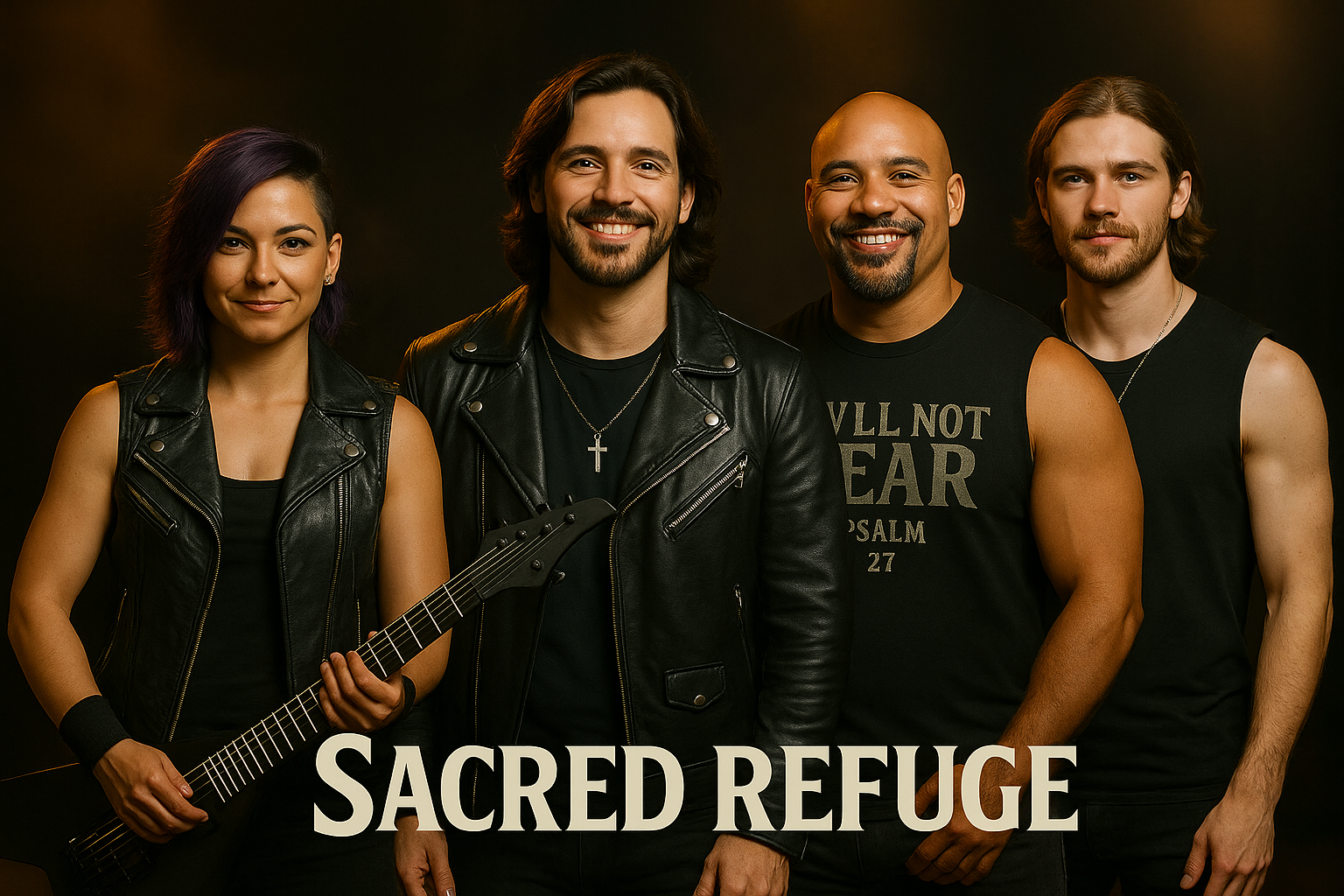
Sacred Refuge My AI viral band that doesn’t actually exist

After hearing about The Velvet Sundown—the viral band that doesn’t actually exist—and how they’ve taken over Spotify with well over 1,000,000 streams, I was inspired. Since I’ve started writing songs and using Songer to generate music and vocals for them, I thought: why not try creating a virtual band of my own?


There’s still a lot of work to be done, but here’s what I’ve come up with so far. You can check it out on YouTube: https://youtu.be/mWZ82MMaN4I

"This is an AI Christian band created with ChatGPT. These are not real people. I will be using them in music videos for songs that I write."